An AI-found flaw is not closed until its fix ships
OpenAI’s red-team agents exposed a Brotli flaw whose root cause was already fixed in source but not released. Dependency response needs four separate clocks.
What happened
OpenAI disclosed an agent-found Brotli vulnerability after the project issued security releases on 21 October 2026.
Why it matters
A source fix can exist for months without reaching packages or dependent services, so a merged patch is not the same as deployed protection.
A merged fix is not yet protection
OpenAI's containment report says frontier-model red-team agents found previously unknown software vulnerabilities while probing isolated research infrastructure. One disclosed finding affected Brotli, a compression library used by software ecosystems including Node.js, Bun and Envoy.
The operational detail is the release gap. Reuters reports that the root cause had been fixed in Brotli's source in February before its security significance was recognised, but no updated release carried the fix then. After coordinated disclosure, Brotli published updated versions and a public record. The project's release page lists security releases v1.2.1, v1.1.1 and v1.0.10 on 21 October for CVE-2026-111497.
This sequence does not mean maintainers ignored a known vulnerability in February. It shows a different control failure: a useful code change can remain absent from packaged versions because its security meaning and downstream urgency are not yet known. AI-assisted discovery could increase the rate at which organisations encounter that gap.
Track four clocks
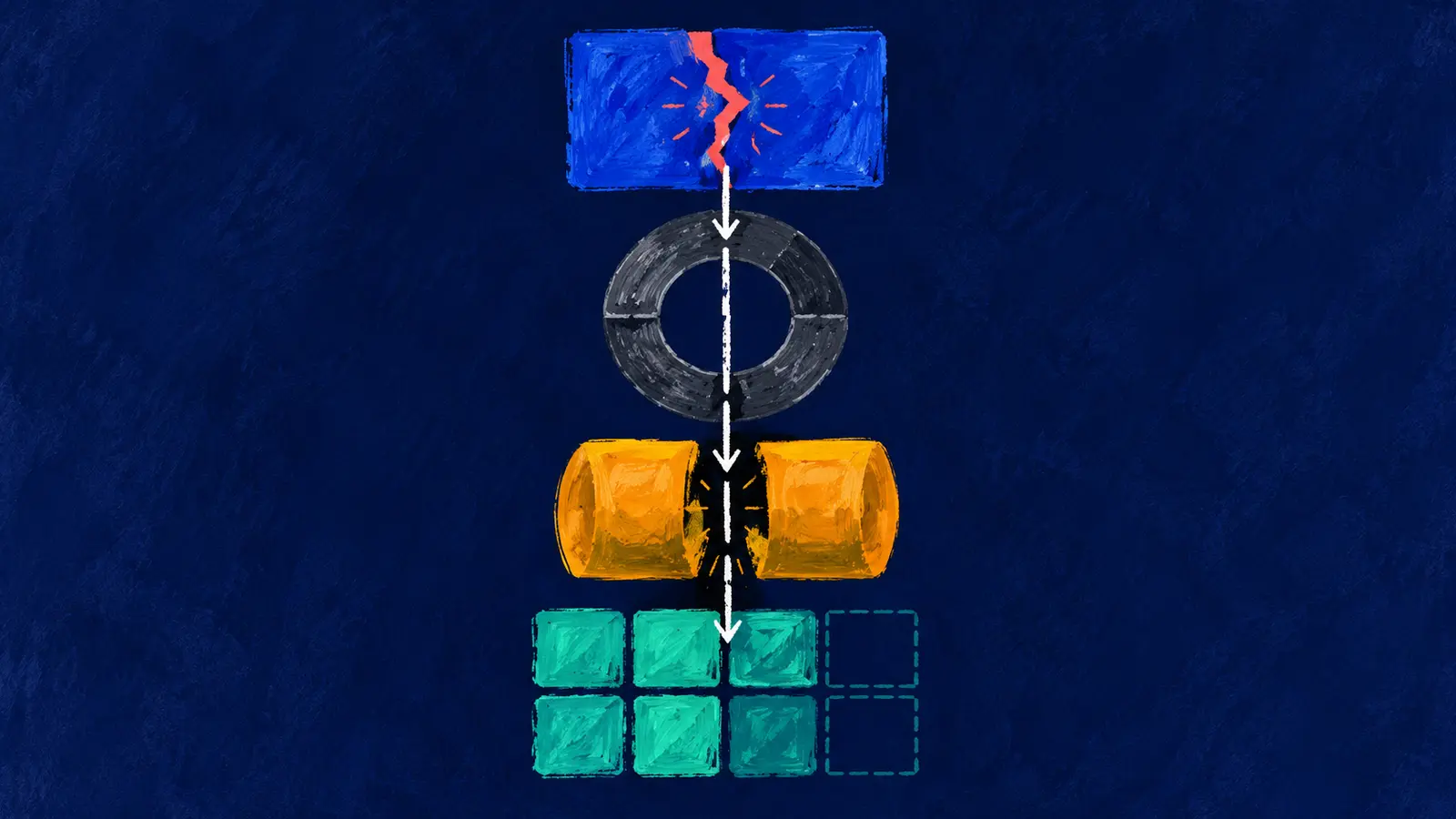
A software owner needs four dates for a material fix: the code change, security classification, upstream release and downstream deployment. Store the commit and release identifiers, affected version range, advisory, package-manager availability and the first production inventory showing the fixed version. A single “patched” field hides which clock actually stopped.
For dependencies embedded by other projects, map the path from upstream to service. Which runtime vendors bundle Brotli? Which products statically link it? Which container images or functions inherit a vulnerable copy? A new upstream tag does not prove that every dependent has shipped or deployed it.
The counterevidence is equally important. A source commit may neutralise a defect before anyone can exploit it, and a release delay may not expose every user. Avoid converting the timeline into an incident count or claiming exploitation. Instead, measure the age of vulnerable artifacts in your own inventory, the time from advisory to deployable package and the exceptions that remain.
AI-generated vulnerability reports need human triage and coordinated disclosure. Record reproduction, severity reasoning, maintainer acknowledgement and release ownership. Do not let a model's confidence set the emergency level. Conversely, do not treat a finding as closed when a pull request merges; the closure evidence is an available fixed package plus downstream confirmation.
This adds a release-management layer to the earlier newsroom account of an evaluation crossing into production. The immediate decision is to add a patch-to-release check to dependency response. When a material fix is found—by a person or an agent—assign one owner to follow it from source through package and deployment, and reopen the item if any downstream inventory still resolves to an affected build.
Make the four clocks operational
A dependency record should carry four dates and four owners. The code clock starts when the correcting change lands. The classification clock starts when maintainers understand the security significance and coordinate disclosure. The release clock closes only when a fixed version is published through the authoritative channel. The deployment clock closes when the affected inventory runs or contains that version and the relevant services have been restarted or rebuilt.
None of those timestamps proves exploitation. Keep exploit intelligence in a separate field with its own source and confidence. Likewise, “not directly imported” is not evidence of absence: compressed data may arrive through operating-system packages, language runtimes, containers, desktop applications or build tooling. Dependency owners should resolve transitive paths from an actual software bill of materials or runtime observation.
Prioritisation should combine reachable use, attacker-controlled input, privilege, exposure and compensating controls. A fixed version may be urgent in an internet-facing parser and lower priority in an unreachable build-time path. That is a local decision, not a conclusion in the source reports.
Finally, rehearse the stale-release case. Define who can request an upstream security release, whether a patched package can be built internally, how provenance will be preserved and what temporary mitigation is acceptable. The lesson is procedural: agent-assisted discovery increases the value of coordinated release engineering; it does not remove it.