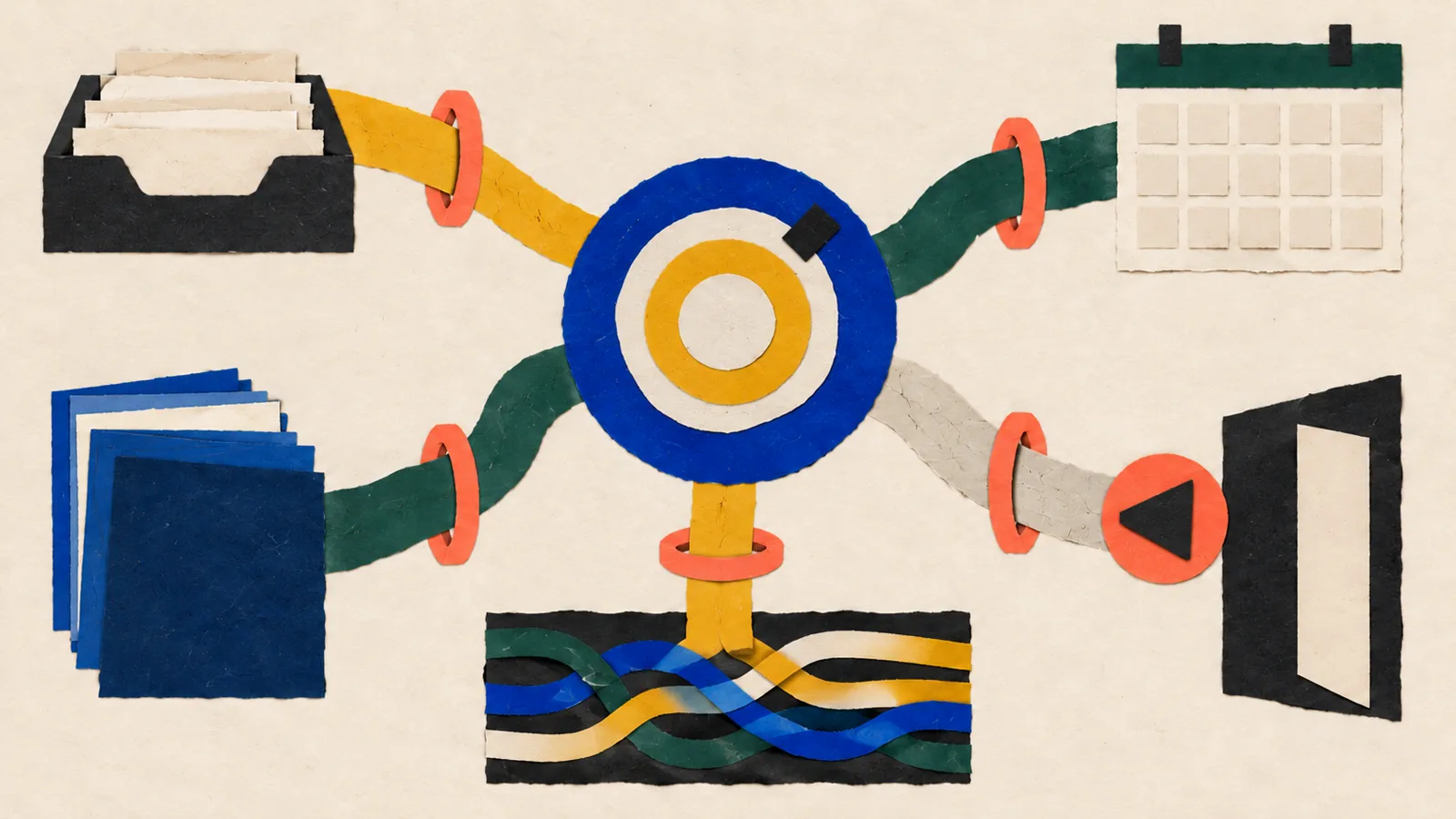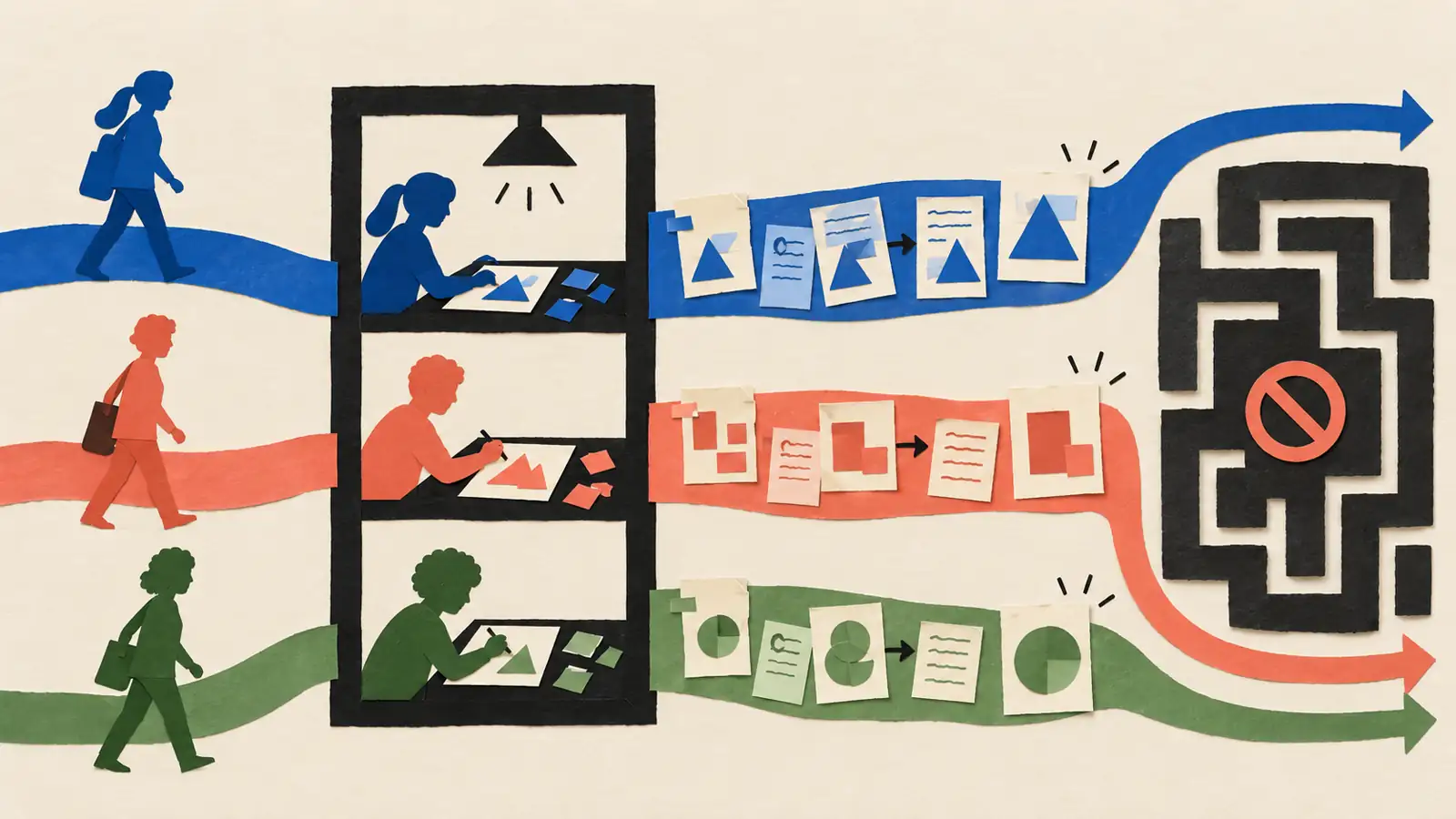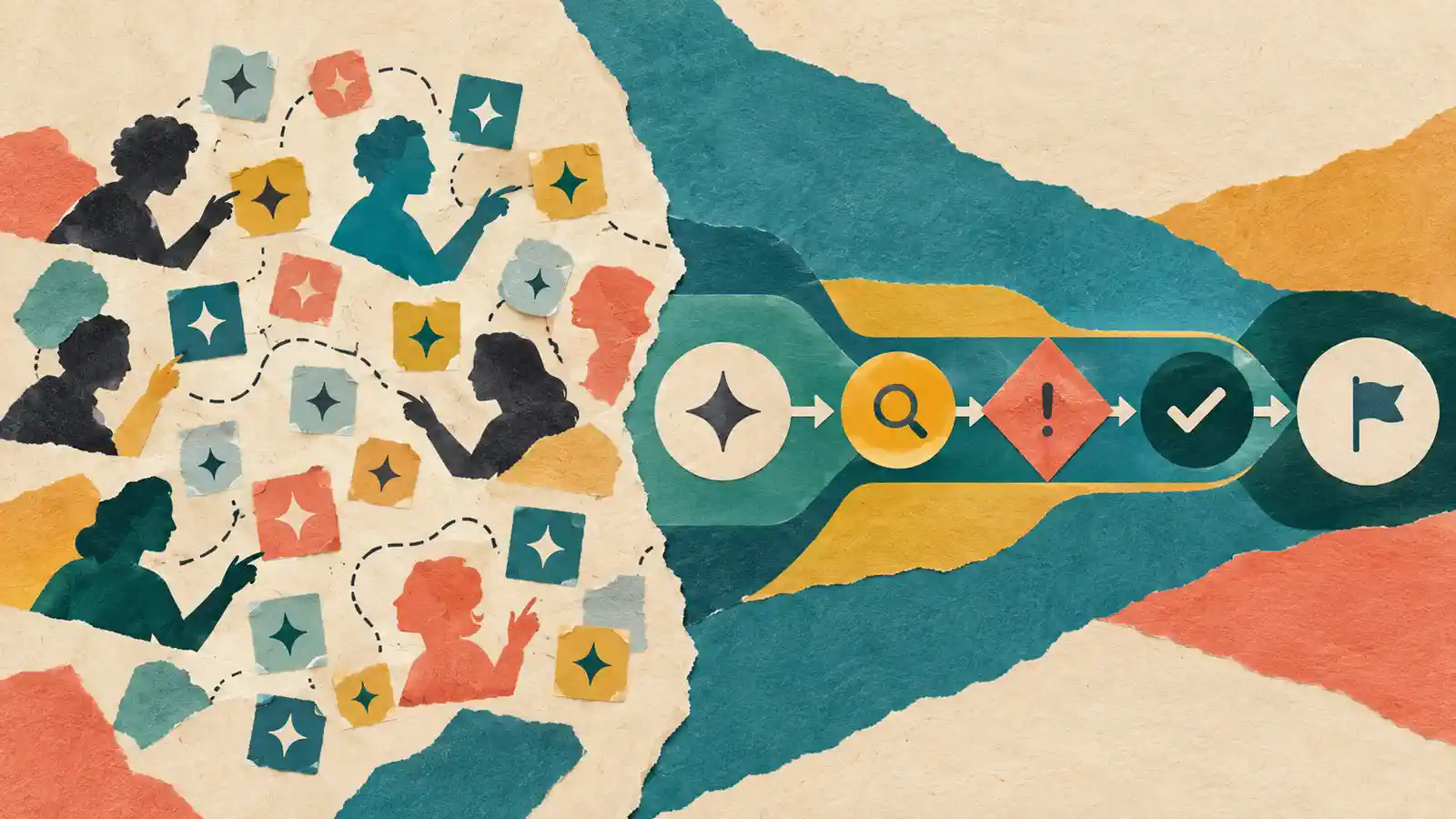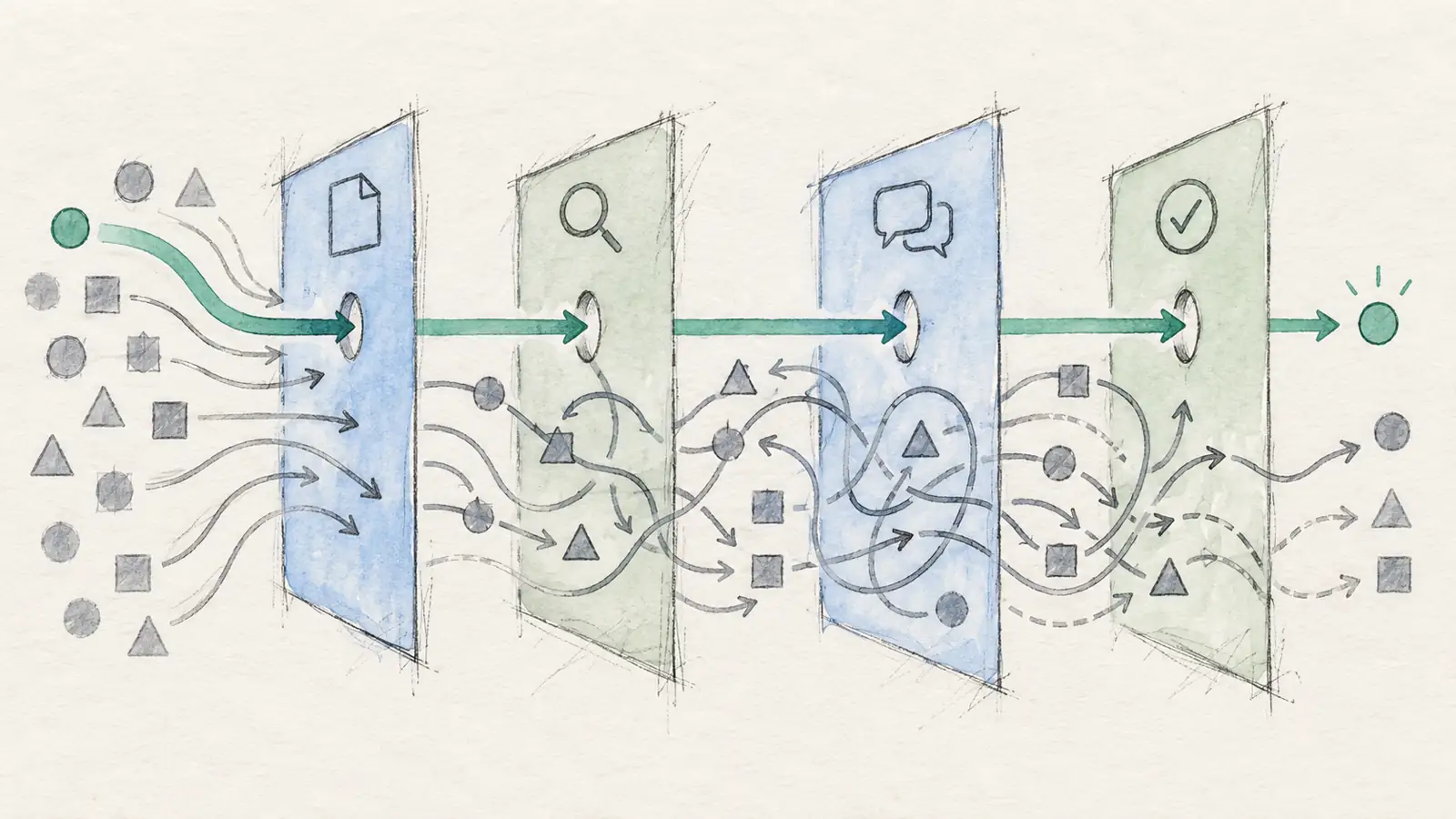
A task map needs a measurement layer before it becomes a workforce plan
Workday’s early-access Work Intelligence connects jobs, tasks and skills. Buyers still need to separate inferred activity, worker confirmation and observed time.
How are skills data, inference, assessment, mobility, learning, and workforce-planning systems changing?
Workday’s early-access Work Intelligence connects jobs, tasks and skills. Buyers still need to separate inferred activity, worker confirmation and observed time.
A new JRC sector analysis reports rising AI use. Workforce planners should distinguish a tool being present from a capability embedded in production.
The proposed acquisition links HR events to access governance. Buyers should test what each event actually changes before automating permissions.
StudentSim models how 60 learners answer and revise across chess, English writing and mathematics. Its proper place is before a human study—not in place of one.
The UK ICO is gathering evidence on agentic AI until 20 November. Deployers should map every data-reading and data-changing action now instead of waiting for final guidance.
A controlled study found that LLM evaluators favoured résumés generated by the same model. Hiring teams need a model-origin invariance test before automated shortlisting affects candidates.
McKinsey’s survey separates self-reported gains for workers from reported EBIT impact. Leaders should test handoffs, queues and rework before treating tool use as organisational productivity.
Google’s new Gemini workplace agent is designed to act across enterprise systems. Treat its identity as a governed workforce account, not as a feature toggle.
A UK review proposes a national pre-apprenticeship route for young people outside work and education. The first contract should define the next step and measure who reaches it.
Skills England’s new framework embeds AI use across 13 employability skills. Providers should translate each statement into a task, trace and assessor rule before treating it as evidence.
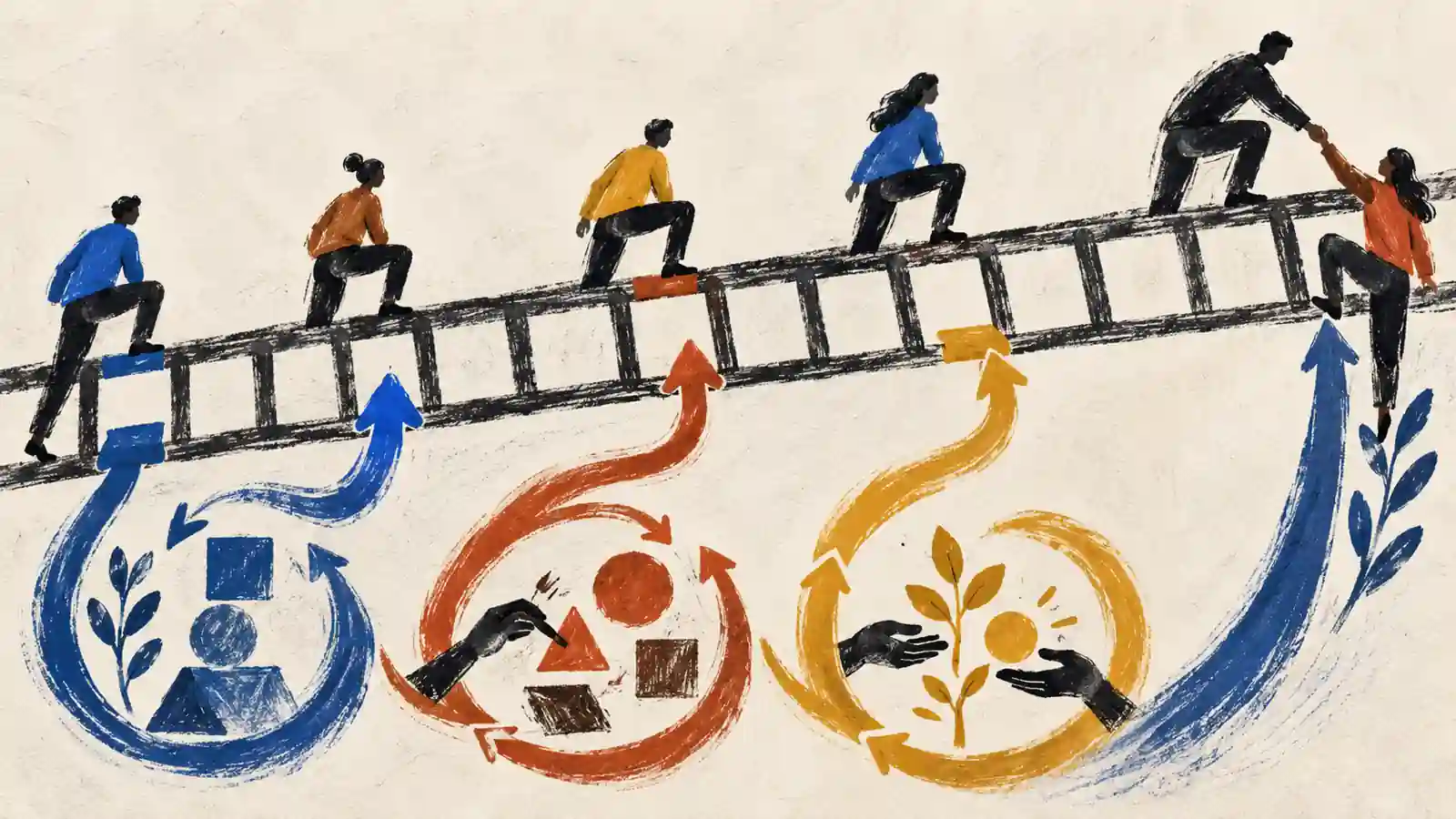
Workday reports that demand for basic AI skills fell after a January peak while demand for building and automation skills rose. The useful response is a work-sample ladder, not a new keyword list.
OpenAI announced college-planning and study features for ChatGPT for Teens as an independent assessment reported safeguard failures. Education buyers need to test when the system hands control to a student, parent or professional.
Anthropic positions Claude Haiku 5.5 for classification, extraction, routing and support at materially lower cost. Scale changes the risk equation: buyers need error budgets by task, not one benchmark average.
SAP plans to acquire TechWolf and connect its work, task and skills graph to SuccessFactors. Before inferred skills shape mobility or learning, buyers need lineage, freshness and contestability rules.
Claude Frontier Academy combines a graded simulation with a 12-week workplace project. Employers should define the project record now, before the 10,000-person target becomes the outcome.
A federal judge paired citation checking with a warning about stunted training. Legal teams need protected unaided drafting and supervised revision, not only a final accuracy checklist.
A European Commission systematic review finds the strongest evidence for learning outcomes, with more mixed motivation evidence and little socio-emotional evidence. Procurement should therefore test the local learning mechanism, not import an average effect.
Singapore’s PATH programme packages HR tools, implementation support and training around twelve AI fluency badges. The missing operating decision is how employers will show that badge learning transfers into fairer, better workforce decisions.
China’s 2030 AI-literacy plan spans schools, universities, vocational education and adult learning. Implementation should separate access, teaching quality and demonstrated stage-appropriate capability.
A Google, DeepMind and MIT study combines 15 million Gemini interactions, 2,600 specialist models and a survey of more than 600 scientists. Capacity planning should follow the bottleneck downstream.
A 500-person US and UK survey links wider AI use with satisfaction and reported skill development, while respondents also see a harder entry path. Track practice opportunities separately from sentiment.
A European evidence review says AI can improve immediate performance without necessarily improving learning. Programme owners should add delayed, unaided assessment to AI-supported trials.
NVIDIA reports that DOCA agent skills lifted a model from 19% to 100% on 65 vendor-designed prompts. The useful next step is local reproduction across hardware, smoke tests and rollback.
Coursera’s 2026 report pairs AI and human-skill learning across 98 countries. The index can guide curriculum questions, but platform activity cannot prove employer demand or workplace capability.
A 45,398-response higher-education survey finds 64% of faculty report AI-literacy training, while 29% of students think instructors are well equipped to guide AI use. The gap is a transfer question, not a training-volume score.
A WGU survey says 60% of U.S. hiring professionals find real skills harder to evaluate in the AI era. The actionable response is a transparent evidence chain, not an unvalidated authenticity score.
Bain-related reporting says 6% of marketing organisations see significant AI impact, while BCG says nearly half of companies create meaningful value. The gap is a methods question before it is a market conclusion.
OpenAI’s Dots can operate persistently with identities, tools and enterprise access. Organisations should inventory each delegated authority, approval boundary and human handoff before expanding autonomy.
Reports that Multiverse uses automated transcript analysis to flag instructor performance show why a monitoring signal must remain traceable, reviewable and open to correction before it affects a person.
Six banks proposed voluntary principles for AI-mediated shopping and payments around transparency, safety, privacy, choice and interoperability. Product teams still need an enforceable mandate, liability map and redress test for each transaction.
A Harris Poll survey of 755 U.S. HR and learning leaders found greater confidence in knowing which skills jobs need than in knowing whether employees possess them. That is a measurement problem, not proof of a workforce deficit.
An OECD report proposes AI-supported matching for employment services in Belgium and Greece while stressing fragmented data, human judgement and gradual deployment. The first design artefact should define the service decision, evidence and appeal path.
Snorkel AI’s new funding highlights demand for expert-authored datasets and reinforcement-learning environments. Buyers still need to see who exercised judgment, how rubrics changed and where automated quality checks failed.
The Agent Skills format makes reusable instructions and resources portable across AI tools. That convenience creates a supply-chain boundary: organisations need provenance, review, version pinning and revocation before a skill can act.
A large UK workforce survey reports broad GenAI exposure, while other research shows uneven workplace adoption. Leaders need task-level measures of repeated, governed use before declaring a process transformed.
England recorded 160 foundation-apprenticeship starts in the first eight reported months, while employer familiarity with technical routes remained low. The bottleneck must be located before funding is scaled.
A new coalition aims to coordinate language data for more than 3 billion people. Volume matters, but consent, rights, representation and downstream performance need their own evidence.
Artificial Analysis changed the composition and weighting of its Intelligence Index. That is useful evidence, but enterprises should replay their own tasks before changing a model decision.
Recording and summarisation can make an interview searchable and persistent. Employers need consent, correction, access, retention and deletion rules before routine use.
Claude Code Projects can coordinate parallel cloud threads, each on its own branch. The bottleneck moves from producing changes to sequencing, testing and accepting them.
Only a third of surveyed employers said time to hire improved from 2025, while two thirds reported no change or a slowdown. The operating question is not whether a recruiter uses AI, but which stage actually releases or adds delay.
Salesforce wants data, permissions and workflows to travel into Claude, Slack and other interfaces. Buyers should test effective permissions, attribution and recovery across the whole action path—not assume that a familiar CRM policy survives every new surface.
A parliamentary committee says current rules focus too heavily on users and calls for risk-based duties, independent oversight, transparency and redress. HR and public-service buyers should map the whole supply chain now.
Two signed laws create a framework for independent verification organisations and a registry for AI auditors. The hard enterprise question is how to prove competence, access and independence in practice.
Fosway’s 2026 market summary says AI and agentic interfaces dominate vendor plans, while maturity, deliverables and future costs remain highly variable. Procurement needs a value schedule that survives the demo.
Visa, Mastercard and Ant International are aligning how payment ecosystems recognise purchasing agents. Their proposal already reaches beyond identity, but organisations still need to own limits, exceptions, revocation and redress.
A north-west England pilot connects short AI training with apprenticeships for young people outside work or education. Its value will depend on conversion, retention and task-level evidence.
A new study finds gaps in literacy, disciplinary application and responsible use across the UKRI-supported community. Its proposed user typology could turn fragmented provision into navigable pathways.
The commission’s recommendations span device approval, clinical accountability, organisational governance and system assurance. Health leaders should prepare evidence ownership before rules are final.
US postings that mention AI skills rose 165% year over year, yet official business-use data remains uneven. The gap is a measurement warning for workforce planners.
A joint statement sets eight priorities, from teacher agency and learner rights to auditability and total cost. It is non-binding, but gives education leaders a stronger procurement test.
A new child-safety package requires AI chatbot operators to assess risks before rollout and adds independent-evaluation infrastructure. Product teams now need evidence that controls work in context.
OpenAI's sector product combines financial datasets, firm templates and enterprise controls for bankers and researchers. That makes entitlement design and review evidence part of the job architecture.
A Taggd–CII report says 52% of surveyed GCCs plan to expand in FY27, while critical roles remain slow to fill and 80% offer generative-AI training. The numbers point to pipeline design, not a single shortage score.
A study of nearly 200,000 real résumés found concealed prompt injections in about 1%. That is a measured platform sample—not a licence to brand applicants as attackers.
The framework update is still in development, but its emerging direction points towards responsibility, supervision and role design rather than a catalogue of fashionable AI tools.
The binding law separates provider duties from deployer duties and machine-readable marking from disclosures people can perceive. The Commission's guidance helps, but it is not the law itself.
SAP's 1H 2026 documentation describes a review queue for imported and inferred skills, while trusted sources can write directly to the Attributes Library.
Regulation (EU) 2026/1744 sets different dates for Chapter III, Sections 1–3 duties for Annex III and Annex I high-risk systems. Other AI Act clocks continue.