Regulatory assistants need separate answer and citation gates
A 110-question EU AI Act benchmark found that only two of five specialist assistants consistently beat general baselines. Professional tone was common even when correctness or references were weak.
What happened
Researchers released an expert-curated EU AI Act question-answering benchmark and results from a blind challenge involving three general baselines and five specialist assistants.
Why it matters
The results separate plausible regulatory prose from reliable work: specialization and polished tone do not guarantee correct answers or the right legal references.
A benchmark built around regulatory work products
The EU AI Act Q&A Benchmark contains 110 expert-curated, open-ended questions. Each item includes an exemplary answer, question-specific correctness criteria and expected references. The evaluation separates answer correctness, reference quality, concision, tone and latency. A multi-turn hard mode adds simulated user pushback rather than scoring only the first polished response.
Five purpose-built assistants entered the challenge without seeing the benchmark items. They were compared with three off-the-shelf baselines, including one basic retrieval-augmented setup. Only two submitted assistants consistently outperformed both general-purpose baselines in both evaluation modes. The paper reports roughly a 30-percentage-point gap between the best and worst specialist systems, while even weaker systems generally produced professional-sounding answers.
Correctness and citation can fail separately
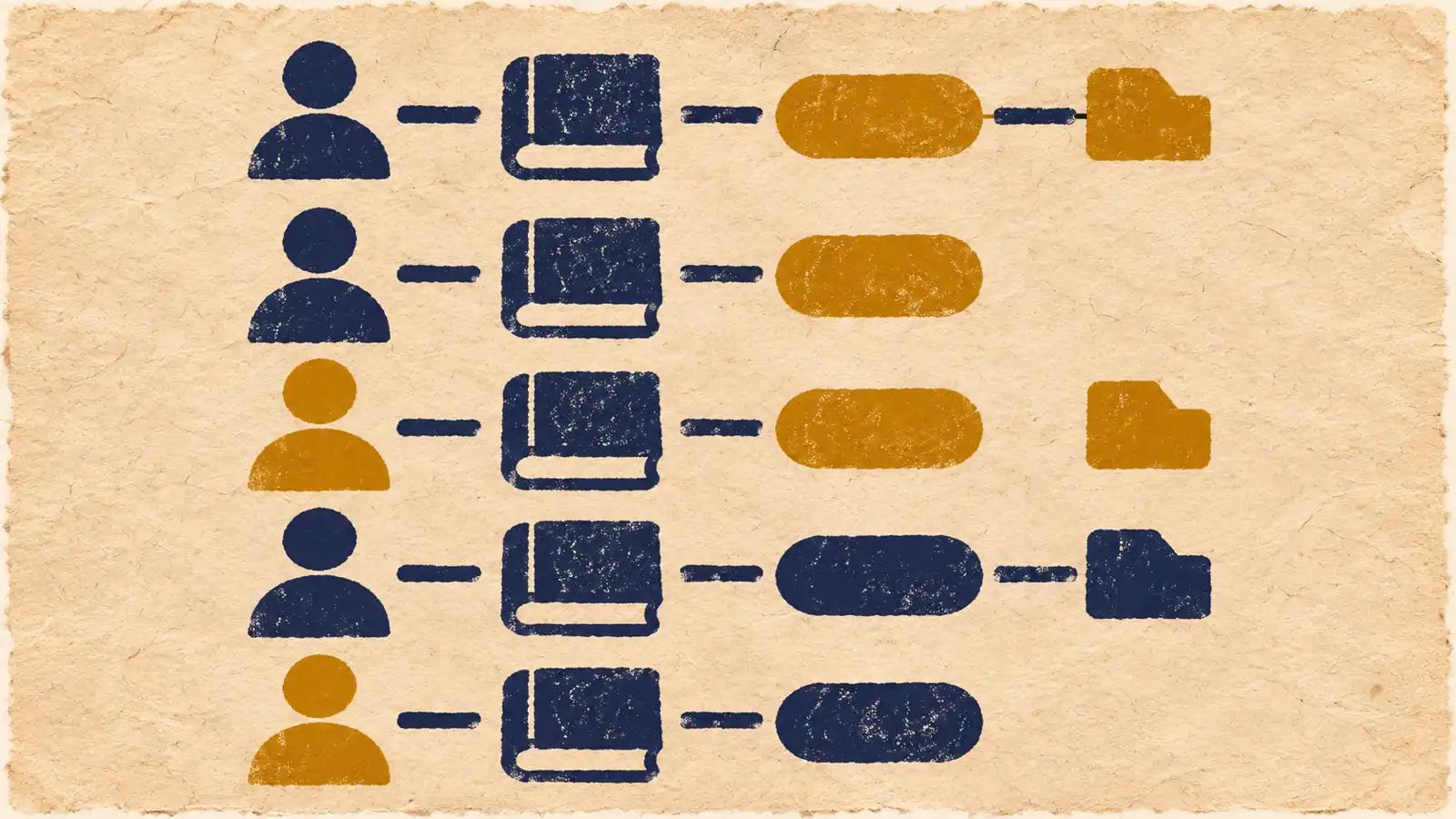
The authors' main operating lesson is that answer correctness and citation quality need separate evaluation. A response can be broadly correct but fail to cite the relevant provisions. Tone is weaker still as a proxy: confident regulatory language can hide a missing condition, an overbroad conclusion or the wrong reference.
The benchmark is a preprint and its 110 questions reflect the curators' interpretation of a changing legal instrument. It also uses LLM-as-judge components alongside deterministic checks. The official EU AI Act Service Desk is therefore a necessary source boundary, not proof that a benchmark score makes a tool legally reliable. Teams still need current primary law, qualified review and version control.
Procure the behavior, not the label
For a pilot, construct a local blind set from actual questions and score three gates independently: substantive criteria, exact supporting provisions and response to a misleading follow-up. Set a stop rule for every gate. Preserve the retrieved passages and edition date so a reviewer can distinguish a reasoning failure from stale law or failed retrieval.
Do not let an aggregate average compensate for a citation failure on a consequential question. A specialist label should earn no credit by itself; the paper shows that purpose-built development can underperform a general baseline. This extends the evidence-led review in EU grant reviews need an AI contribution ledger: the machine contribution must remain inspectable at the point where a person owns the decision.
Decision rule
Do not deploy a regulatory assistant on the strength of professional tone or one combined score. Require separate pass thresholds for answer substance, authoritative references and resistance to user pressure, with qualified human review still pending.