AI-cyber scenarios need a patch-consumption capacity test
The UK NCSC says AI will increase the scale and speed of intrusion activity through 2028 and may accelerate exploitation of known flaws. Its three scenarios are planning tools, not forecasts—and all require capacity to consume patches faster.
What happened
The UK National Cyber Security Centre published a three-scenario assessment of how AI may change cyber intrusion through 2028.
Why it matters
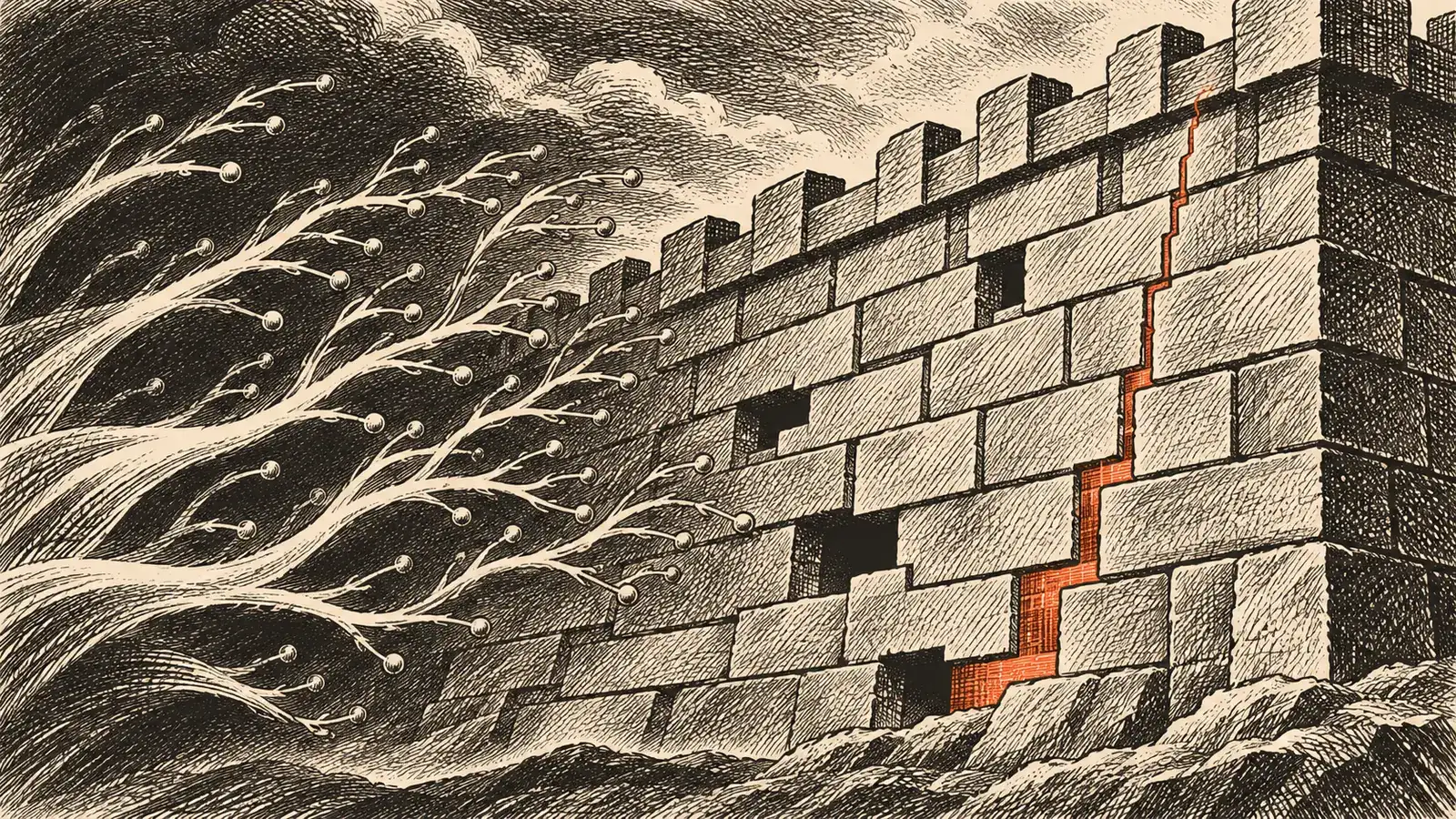
If discovery and exploitation accelerate while triage, testing and deployment do not, a larger stream of findings can extend the vulnerable queue.
Scenarios are tests, not forecasts
The UK National Cyber Security Centre assessment sets out three plausible ways artificial intelligence could affect cyber intrusion through 2028. The agency explicitly frames them as scenarios rather than predictions. Across the set, it expects AI to increase the scale and speed of malicious activity, while known vulnerabilities and critical national infrastructure remain important targets.
That distinction should survive into board reporting. A scenario is useful because it exposes an operating-model weakness under several futures. Turning it into a point forecast would create false precision and obscure the uncertainty the exercise was designed to preserve.
The bottleneck moves to remediation
Faster scanning, exploit development or phishing production can raise the arrival rate of actionable findings. Defence improves only if the organisation can validate, prioritise, test and deploy changes at a comparable rate. Otherwise, the backlog grows even when detection improves.
For each scenario, model four queues: externally disclosed vulnerabilities, internally discovered weaknesses, patches awaiting test and approved patches awaiting deployment. Measure arrival rate, reviewer-hours per item, regression rate, deployment time and the age of the oldest unreviewed critical item. The final measure prevents a high-volume team from appearing healthy while one consequential exposure waits.
Google Cloud's independent vulnerability discovery and exploitation trends provide a separate industry view of how automation changes discovery and exploitation. They do not verify the NCSC's 2028 scenarios. Their role here is counterweight: attacker and defender tools evolve together, so local queue data should determine investment.
Separate scope from throughput
Patch capacity does not replace authorization. An AI-enabled security workflow still needs a precise asset boundary, approved techniques, logging and a stop condition. The organisation should replay attempts to cross that boundary separately from its remediation metrics. A system can be productive within scope and unsafe outside it, or well governed yet ineffective at closing findings.
This complements GPT-6 cyber authorization and patch capacity. The earlier article applied the principle to one restricted model; the NCSC scenarios make the capacity question relevant to an organisation's whole vulnerability pipeline.
Run the capacity test
Stress the pipeline with a 2× and 5× increase in incoming findings, then simulate a major vulnerability affecting a widely deployed dependency. Record which service-level limit fails first and which work can be paused without increasing risk. Repeat with reduced staffing and a patch that causes a realistic regression.
Decision rule
Do not fund an AI-cyber programme from a scenario headline. Fund the combination of scoped access, reproduction, patch testing and deployment capacity that keeps the oldest unreviewed critical item below a defined limit in every scenario.