AI freelance demand is rebundling work; hire for task combinations
OpenAI and Upwork find AI-related projects combine familiar tasks in less familiar ways and carry broader scopes. Test complete delivery bundles instead of treating one AI skill as the hiring unit.
What happened
OpenAI and Upwork published a joint report on 10 November 2026 comparing work-related ChatGPT activity with freelance job postings.
Why it matters
A role taxonomy built around isolated skills can miss the cross-disciplinary combinations clients are beginning to buy.
The unit of demand is changing
The OpenAI–Upwork report compares work-related ChatGPT activity with projects posted on Upwork. The researchers map both sources into 63 activity categories. Of those categories, 43 fit a pattern in which activities more common in ChatGPT lost share on Upwork, while 20 moved in the other direction. The pattern is not uniform enough to support a simple substitution story.
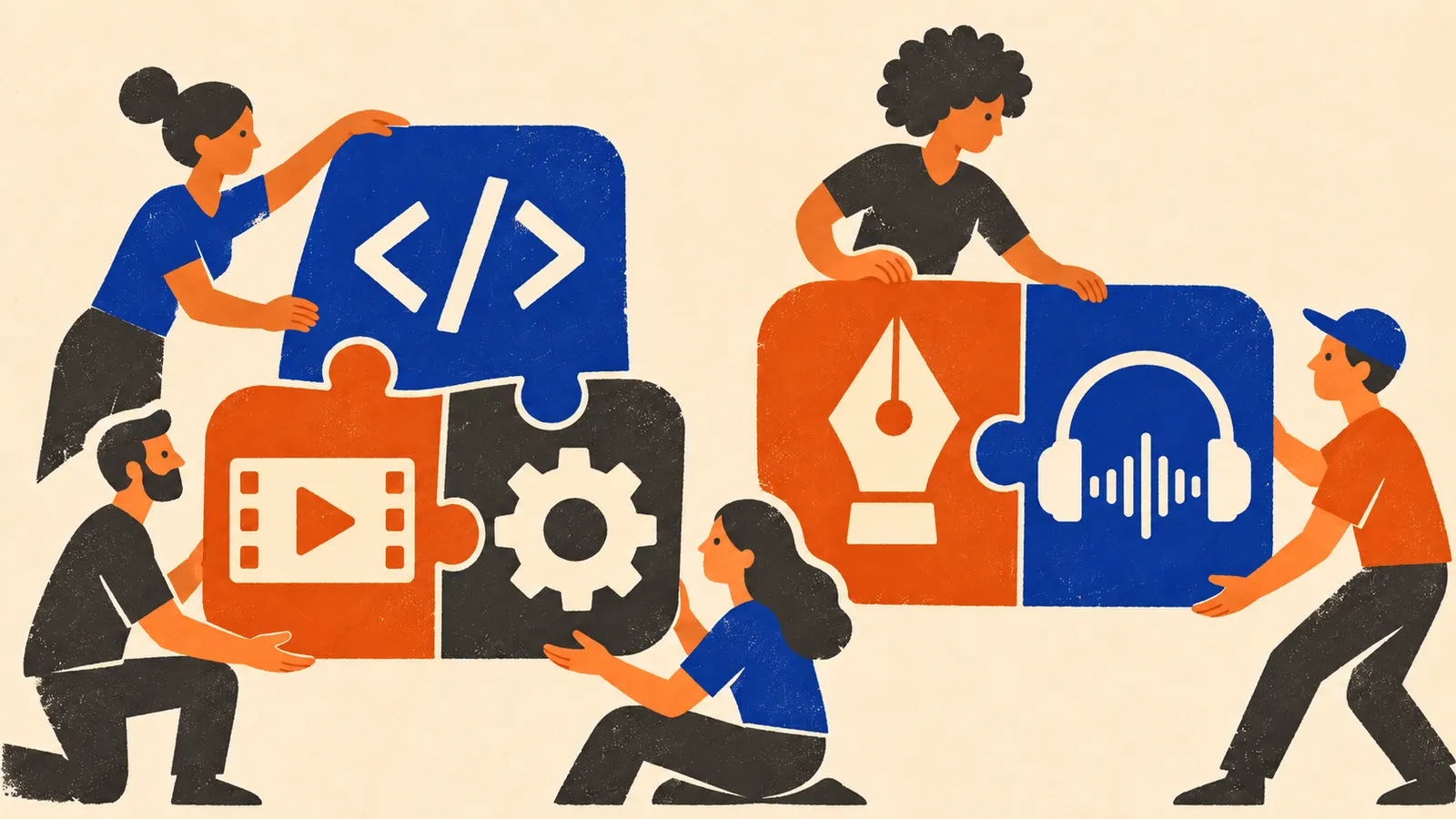
The more actionable signal appears inside project scope. AI-related postings requested 3.3 tasks on average, compared with 3.2 for other postings. Among postings with at least two tasks, the average share of task pairs that had been uncommon before the generative-AI period was 8.4% for AI-related work and 2.4% for other work. The report also says the diversity of activities inside AI-related postings rose from 14.6 to 21.2, a 45% increase. Fixed-price budgets and hours were larger after comparisons within work type and posting month, while posted hourly rates were similar.
These are associations in one marketplace, not causal estimates for the whole labour market. The data do not show that adding AI causes a larger budget, that every occupation is rebundling, or that a named task combination will persist. An independent evidence note also flags the lack of external replication and the use of inferred task groups.
Hire and train against a bundle
For each recurring project, define the smallest complete delivery bundle: the outcome, adjacent production tasks, review duties, integration work and handoff evidence. Score candidates on the whole bundle and on the seams between tasks. A video-plus-motion-graphics bundle, for example, needs file compatibility, revision control and rights checks as well as tool fluency.
Run a 30-day bundle test. Compare cycle time, rework, escalation rate, reviewer effort and delivery completeness against the prior staffing model. Record which task pairs actually co-occur instead of copying a platform-wide average. This extends the task-map measurement layer: the map should measure combinations and handoffs, not only individual tasks.
Decision rule
Do not add an isolated AI skill to a job description because it is fashionable. Create or buy a new capability only when a repeated task bundle is visible, a candidate can deliver the whole bundle under review, and the measured reduction in handoff cost does not come from hidden rework or weaker quality controls.