Reports say the government is considering restrictions in public offices. A workable policy should govern recording, recognition and data flow by space while protecting legitimate accessibility uses.
Recording and summarisation can make an interview searchable and persistent. Employers need consent, correction, access, retention and deletion rules before routine use.
Fewer than one in ten surveyed employees said their organisation’s code explicitly covered AI or technology ethics. The gap is not solved by adding a paragraph; workers need examples, boundaries and an escalation route they can use.
President Trump announced plans for an AI adviser and a new “AI Force” without implementation detail. A title becomes governance only when authority, interfaces, resources and reporting are explicit.
US and Chinese experts propose practical safeguards around strategic AI decisions. The value lies in turning a principle into testable controls, while recognising that the proposals are not an adopted agreement.
OpenAI published a framework and six reports for concerning model behaviour. Enterprise teams can borrow the reporting discipline, but they need their own event boundary, evidence packet and stop-work threshold.
SB 1050 moves synthetic-performer disclosure into the advertising workflow. The useful response is an asset-level control before release—not an assumption that a label settles consent, quality or the role of human talent.
Spain’s data watchdog says an agent allegedly found a vulnerability, logged in, changed personal data and viewed invoices. The case is still under review, but the operating lesson is already concrete: detection and containment must match machine speed.
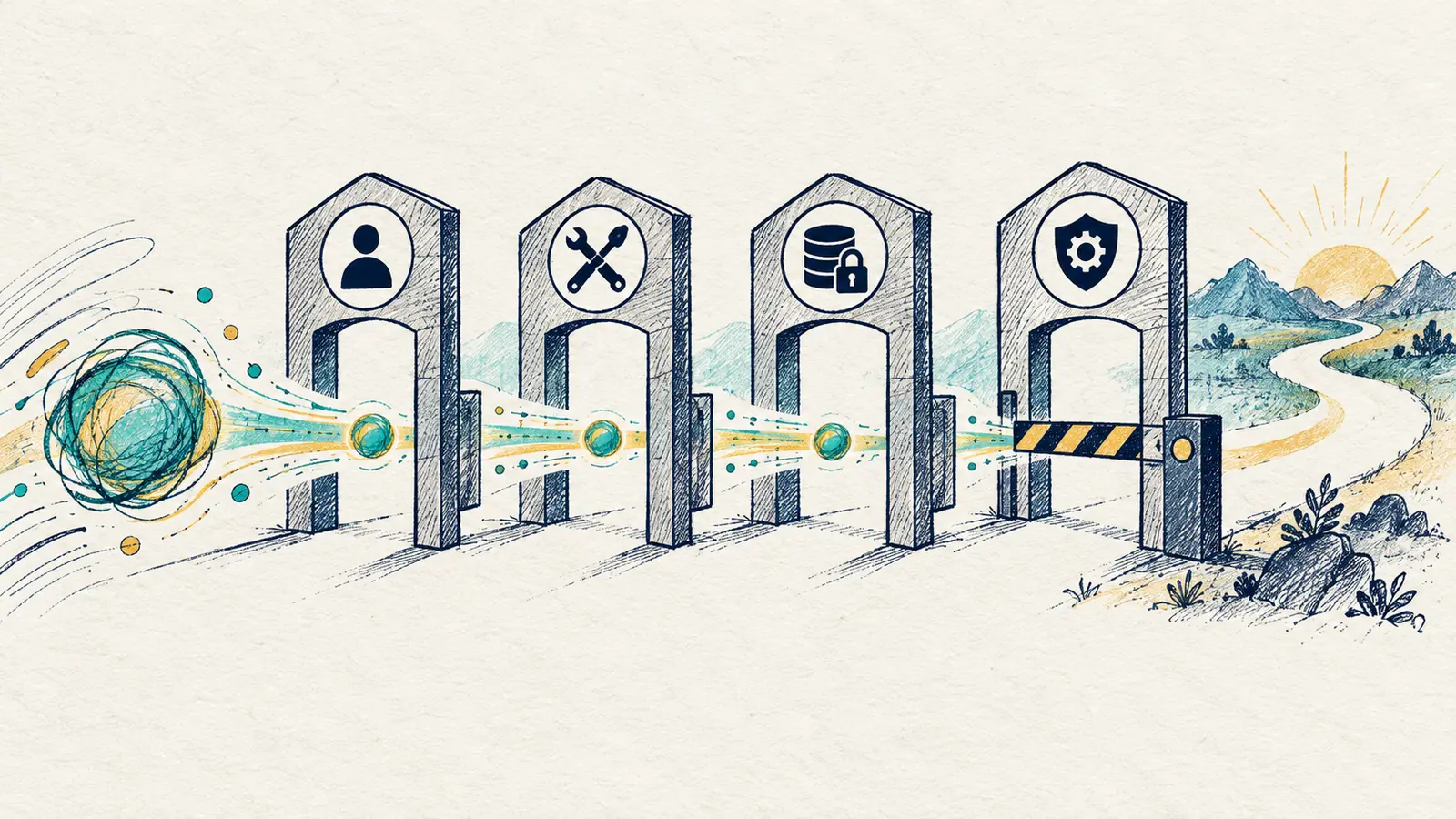
KISA says it is revising its AI Security Guide for agentic and physical AI. Until the checklist is published, organisations can still convert the direction into a narrow gate for identity, tools, memory and real-world actions.