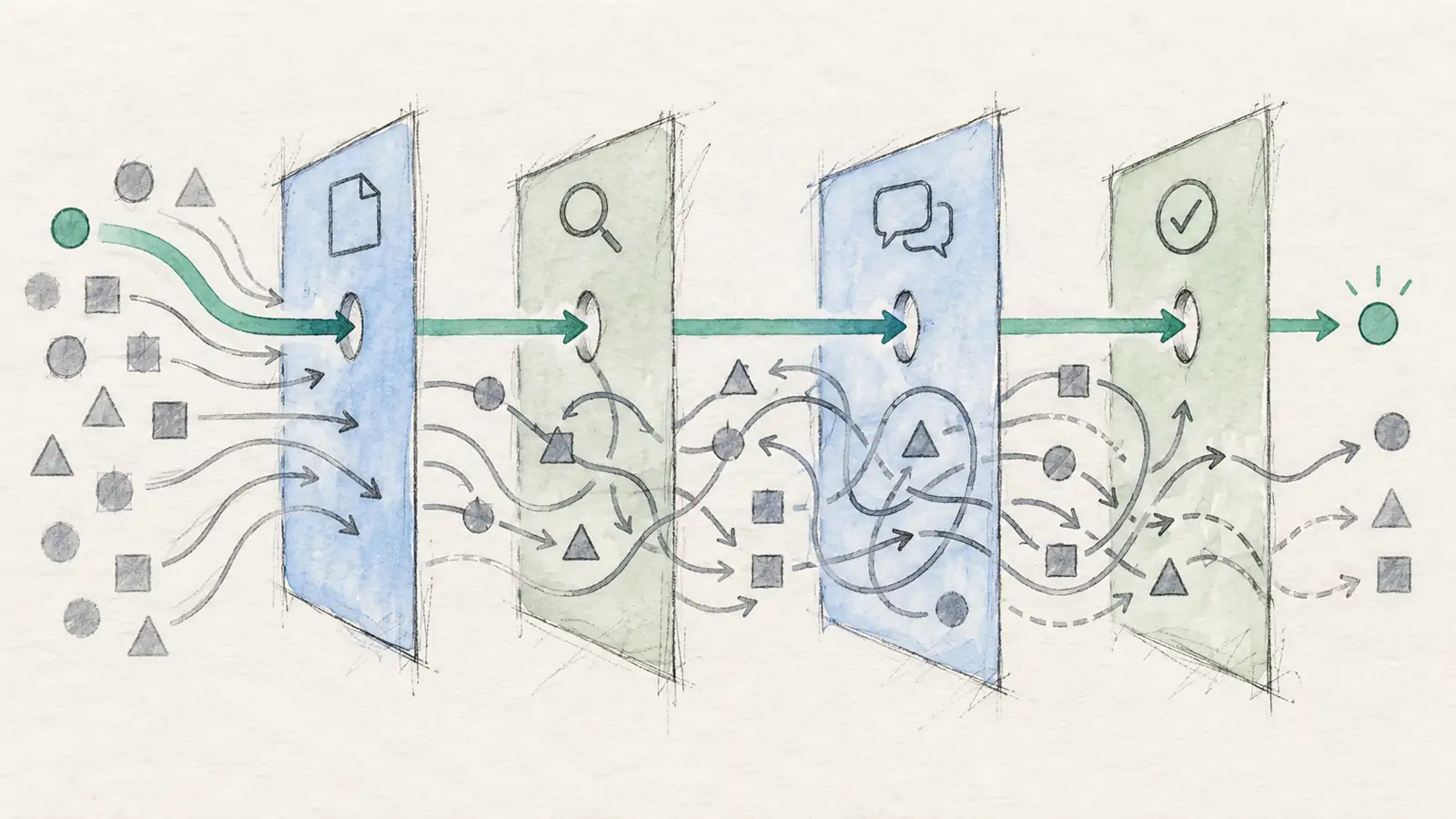
Only a third of surveyed employers said time to hire improved from 2025, while two thirds reported no change or a slowdown. The operating question is not whether a recruiter uses AI, but which stage actually releases or adds delay.
Global and LinkedIn data point to persistent underrepresentation in AI work and leadership. The actionable unit is not a generic pipeline promise, but the conversion and loss rate at each talent decision.
A new Brookings synthesis argues that exposure does not equal viable automation and that policy should track changes in expertise and opportunity. Employers can use the same logic: fund targeted pilots when measurable task, wage and mobility signals cross agreed thresholds.
Indian IT firms are reporting more outcome-linked deals as automation compresses effort. The commercial shift is real but limited: most AI pricing still measures effort or output, and disputed attribution can turn a promised outcome into a contract fight.
A UK careers discussion highlights resilient work in engineering, care, education and research. The useful decision is not to predict a safe occupation for 45 years, but to build transferable capability and evidence of adaptation.
Christine Lagarde warns that imported AI could create economy-wide leverage and says Europe’s capacity shortfall may grow sixfold. Sovereignty requires usable models, skills and exit options—not servers alone.
Almost 30% of surveyed workers used generative AI, yet employer training reached fewer than half. The sharpest signal is not adoption alone, but who gets access and who captures the saved time.
CompTIA estimated 86,000 more technology workers across the economy while technology companies cut about 14,700 positions. The apparent contradiction is a measurement lesson, not proof of an AI jobs boom.
A north-west England pilot connects short AI training with apprenticeships for young people outside work or education. Its value will depend on conversion, retention and task-level evidence.