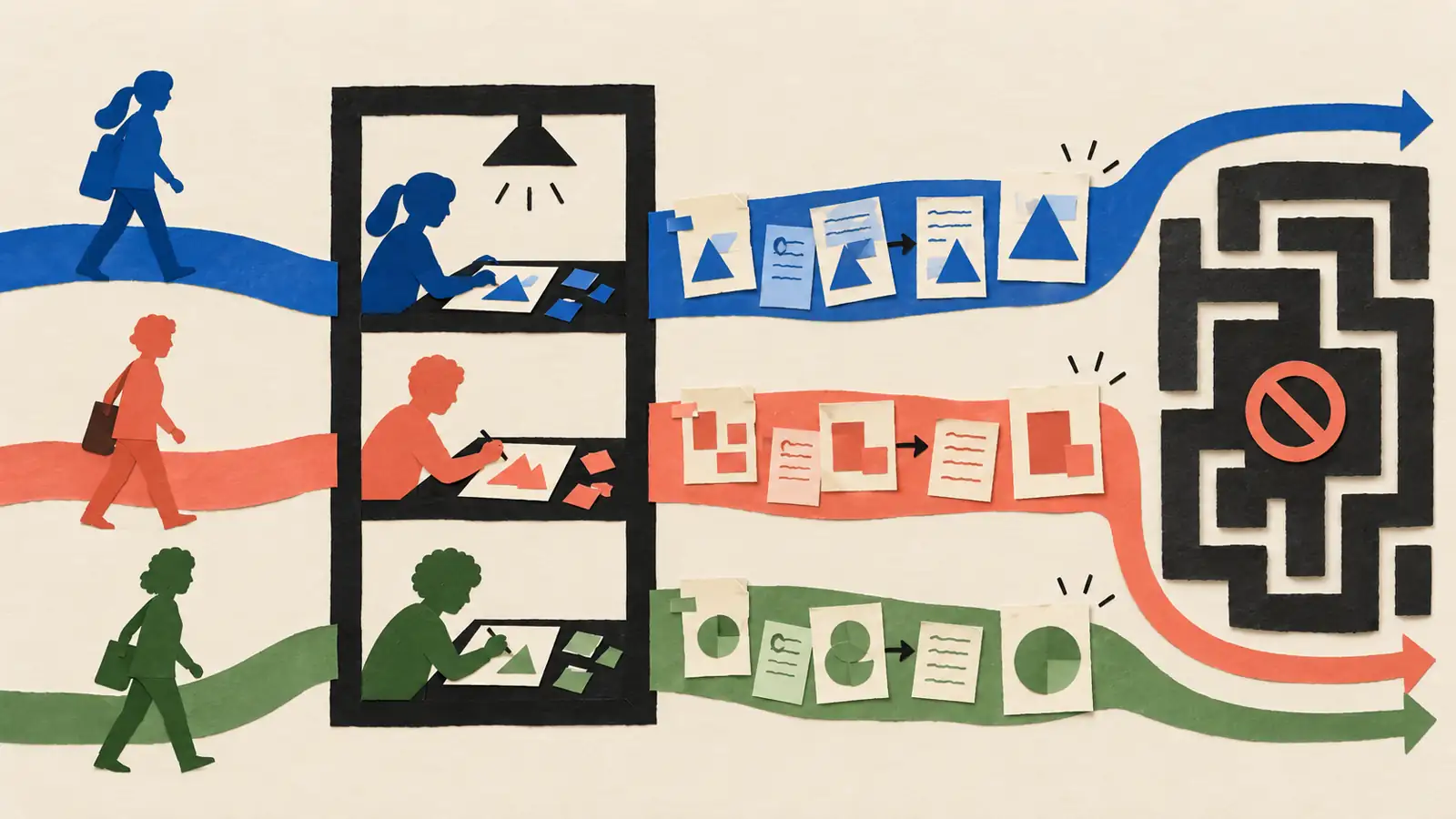
A 45,398-response higher-education survey finds 64% of faculty report AI-literacy training, while 29% of students think instructors are well equipped to guide AI use. The gap is a transfer question, not a training-volume score.
A WGU survey says 60% of U.S. hiring professionals find real skills harder to evaluate in the AI era. The actionable response is a transparent evidence chain, not an unvalidated authenticity score.
Anthropic’s new index says robots can perform many physical tasks in some settings but are cost-competitive for very few. Workforce planning should separate capability, environment and economics.
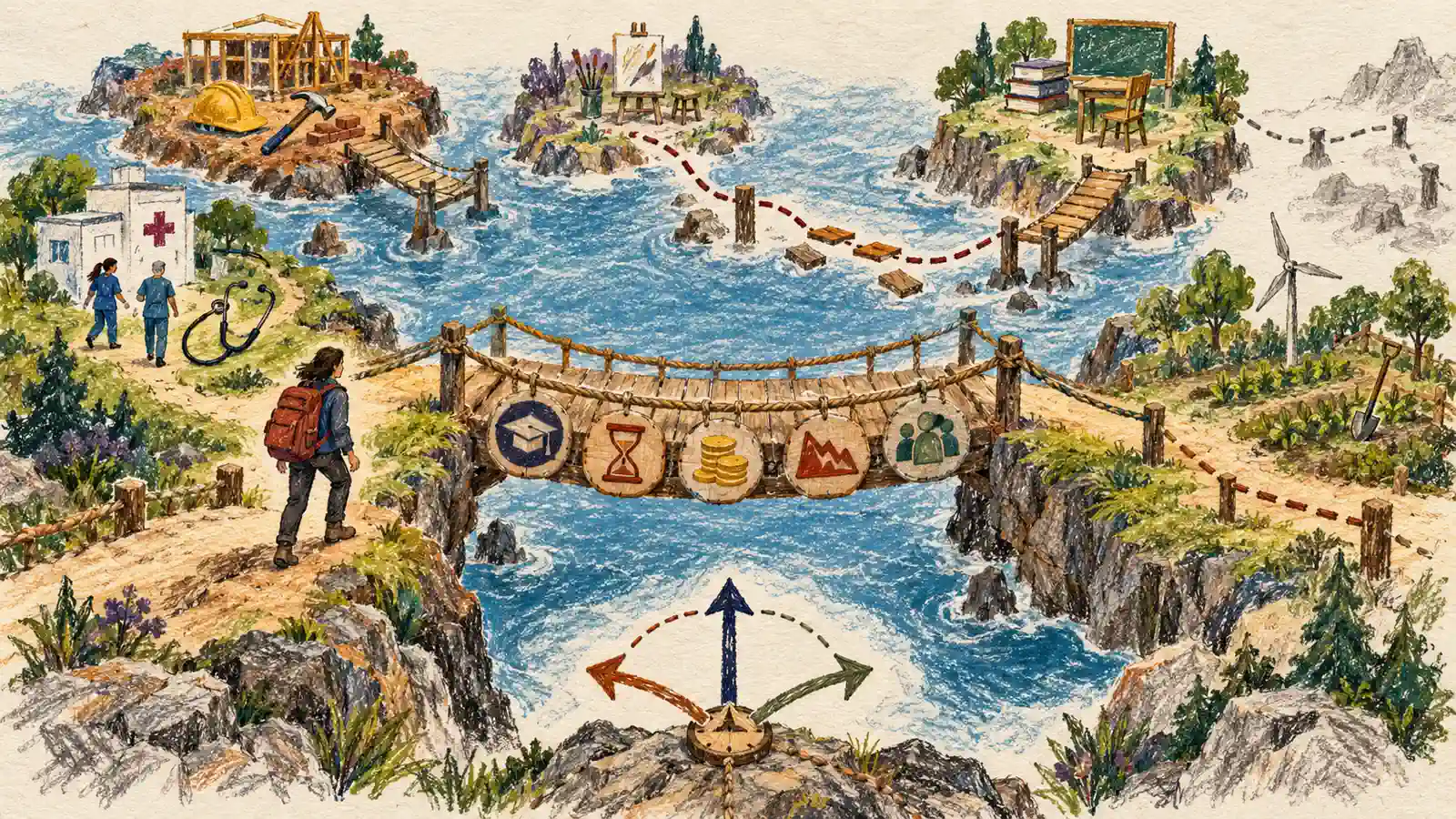
McKinsey models 6 million to 16 million US workers changing occupations by 2035, with 11 million in its midpoint scenario. The planning value lies in pathway constraints, not a single headline.
PwC’s 49,364-worker survey finds rising daily generative-AI use alongside falling reported access to learning. Leaders should measure opportunity by role and workflow before inferring performance.
A new CPS analysis finds no statistically significant AI-related rise in recent US graduate unemployment. Texas administrative evidence points to narrower employment and wage effects, so the next decision is better measurement, not closure.
A Harris Poll survey of 755 U.S. HR and learning leaders found greater confidence in knowing which skills jobs need than in knowing whether employees possess them. That is a measurement problem, not proof of a workforce deficit.
IBM surveyed 1,500 CHROs and 8,800 employees and found concern about judgement, skills erosion and hidden verification work. Self-reported gaps should lead to observed task evidence and redesigned decision rights, not a generic training response.
An ILO brief combines 21 purposively selected enterprise interviews with a survey of 1,591 professionals in China. Its self-reported gains are useful hypotheses, but workforce decisions need task baselines, comparison groups and job-quality measures.